
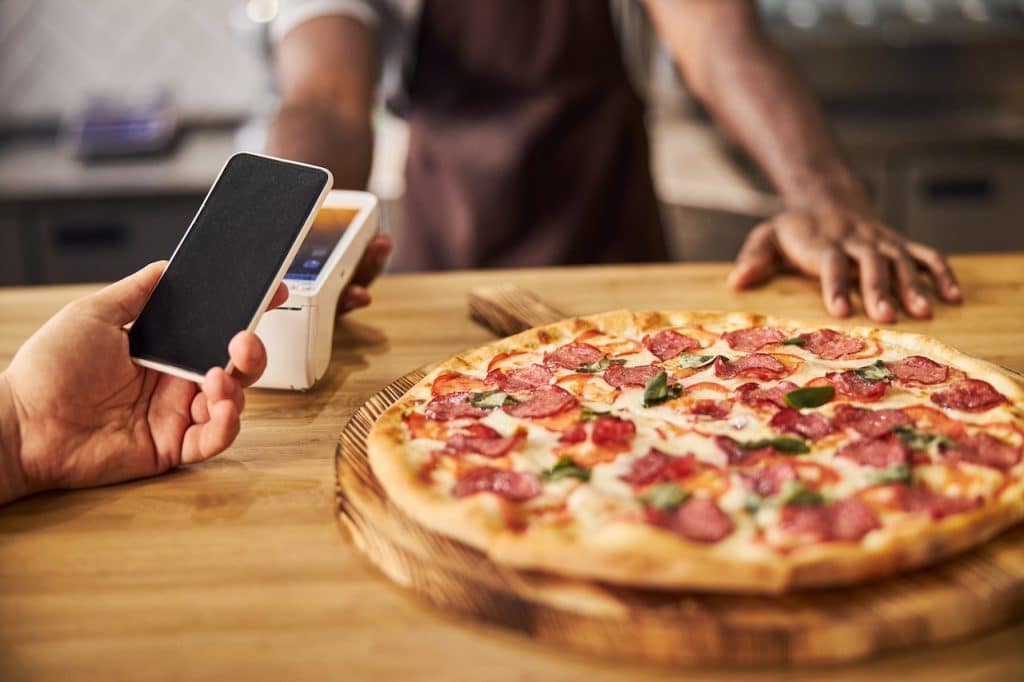
The best pizza POS system is not necessarily the one with the longest feature list or the biggest brand name. For most independent pizza shops, the right system is the one that helps staff take complicated orders quickly, sends clear tickets to the kitchen, tracks sales and ingredients, supports dine-in, takeaway, delivery, and online orders, and does not force the owner into expensive software licenses or unpredictable monthly add-ons.
Pizza businesses have a different workflow from many other restaurants. A café may sell a cappuccino with one or two modifiers. A pizza shop may need to process a large pizza with half-and-half toppings, crust choices, extra cheese, cooking instructions, combo deals, drinks, delivery notes, discounts, and a promised pickup time—all during a Friday night rush. A generic retail POS can accept a payment, but it may struggle to organize the order in a way that makes sense for the counter team and kitchen.
A pizza POS system should therefore do more than ring up sales. It should become the operating system for the shop: taking orders, managing modifiers, routing tickets, tracking inventory, reporting on sales, helping staff work faster, and giving the owner a clearer picture of profitability.
For pizza shops that want a simple and affordable setup, cloud-based systems are often more practical than traditional installed software. They can run on tablets or compatible hardware, update without manual software installations, and allow owners to view sales and reports remotely. They also avoid the old model where a business buys expensive licenses, pays for server maintenance, and needs a technician whenever the menu changes.
What Makes Pizza POS Software Different?
A pizza shop has operational needs that are easy to underestimate until the rush starts. The best pizza software should handle the following without creating workarounds:
- Pizza sizes, crust types, sauces, cheeses, toppings, and cooking instructions
- Half-and-half or split toppings
- Modifier pricing for extra toppings, premium ingredients, and substitutions
- Combo meals, family deals, lunch specials, and add-on drinks
- Dine-in, takeaway, pickup, delivery, phone orders, and online orders
- Kitchen order tickets or kitchen display screens
- Customer records, repeat orders, and loyalty offers
- Ingredient tracking for cheese, dough, sauce, meats, vegetables, beverages, and packaging
- Sales reports by pizza type, shift, employee, order channel, and time of day
- Multiple payment methods, discounts, refunds, and split bills
- Delivery zone, order timing, and driver workflow support where relevant
A pizza shop that uses a basic cash register or a generic retail POS often ends up creating manual systems around the software. Staff write kitchen notes on paper, calculate combos manually, remember ingredient shortages from memory, or use separate tools for delivery orders and customer data. That creates mistakes, slows service, and makes it difficult to understand which pizzas, promotions, or channels are actually profitable.
Modern pizza POS software can reduce those problems by keeping the order flow in one place. When a customer orders a large thin-crust pizza with half pepperoni and half mushrooms, extra mozzarella, garlic dip, and a bottled drink, the POS should guide the cashier through the order and send the kitchen a ticket that is easy to read. That is more valuable than a system that simply looks polished on a touchscreen.
The Best Pizza POS Systems to Consider
There is no single best pizza POS system for every business. The best choice depends on whether the shop is mainly takeaway, delivery-focused, dine-in, multi-location, budget-sensitive, or trying to grow its online ordering and customer loyalty program.
The strongest options usually fall into four groups: affordable cloud restaurant POS systems, pizza-specific delivery systems, large restaurant platforms, and simple payment-first POS systems.
Slant POS: Best for Affordable Cloud-Based Pizza Shop Management
Slant POS is a strong option for independent pizza shops that want restaurant-focused features without relying on expensive installed software licenses. Its pizza and burger POS offering is designed around customizable orders, combo packs, sales reporting, menu flexibility, and restaurant operations. The platform is particularly relevant for operators who need a simple system that can support a busy counter while still giving them useful data about sales and costs.
For a pizza business, menu flexibility is one of the most important factors. Slant POS supports categories, variations, add-ons, modifier sets, and combo management. That can help a shop build pizza menus around different sizes, crusts, toppings, sauces, meal deals, and extras. Instead of creating a separate item for every possible pizza combination, the owner can structure the menu so staff choose the base pizza and then add the customer’s selected options.
This matters because pizza menus can become complicated quickly. A shop may offer small, medium, large, and family pizzas; regular, thin, stuffed, or gluten-free crusts; dozens of toppings; premium toppings; half-and-half options; and different prices for each size. A good POS should make those choices fast and clear. If staff need to type notes manually for every customized pizza, order errors become more likely.
Slant POS also emphasizes billing, kitchen order ticketing, reporting, inventory management, promotions, loyalty, QR ordering, table management, and multi-location tools. For a pizza shop that serves both dine-in and takeaway customers, this can be useful because the same platform can support counter orders, tables, kitchen tickets, customer data, and reporting.
Another advantage is remote visibility. Owners can review sales, revenue, average order value, and sales history from a smartphone, tablet, or computer. This is useful for pizza shop owners who are not always at the counter. They may be buying ingredients, managing another branch, handling supplier relationships, or simply checking performance after the evening rush.
Slant POS is also positioned around low-cost tools for independent restaurants and cafés. That focus can make it a practical alternative for pizza shops that want more restaurant functionality than a simple payment app but do not want to pay for a large enterprise POS package.
Toast: Best for Growing Pizza Restaurants That Need a Broad Restaurant Platform
Toast is one of the most widely recognized restaurant POS systems. It is often considered by pizza restaurants because it offers a broad range of restaurant tools, including POS, kitchen display systems, online ordering, loyalty, payroll-related tools, reporting, handheld devices, and delivery-related capabilities.
Toast can be a strong choice for a growing pizzeria with multiple order channels, a larger team, and plans to expand. It is especially useful for operators who want an integrated ecosystem rather than a collection of separate tools. A pizza shop with dine-in service, online ordering, delivery, loyalty campaigns, and multiple terminals may find Toast’s larger feature set appealing.
However, pizza shop owners should examine the full cost carefully. A system may advertise a low starting price, but the actual monthly spend can rise once hardware, additional terminals, online ordering, loyalty, marketing, payroll, delivery tools, and payment processing are included. Community discussions also show that some operators are concerned about the total cost of add-ons and payment-processing restrictions, although others value the integrated setup.
Toast is generally best for a pizza business that expects to use many advanced features and is comfortable with a more structured ecosystem. It may be less attractive for a small takeaway pizza shop that simply needs affordable order entry, kitchen tickets, menu modifiers, and basic reporting.
Square for Restaurants: Best for Small Shops That Want an Easy Starting Point
Square is popular with small businesses because it is easy to learn, has accessible hardware, and can be used with a relatively simple setup. For a small pizza counter, food stall, or takeaway business, Square can be an approachable entry point.
The system is particularly appealing for operators who want to start quickly, process payments, build a menu, track sales, and avoid a large upfront software investment. It can work well for shops with straightforward menus, limited customization, and a small number of staff.
The limitation is that pizza shops can outgrow a generic setup. Pizza ordering often requires detailed modifier logic, complex topping rules, half-and-half pizzas, different prices by size, combos, delivery workflows, and high-volume ticket management. Some pizza operators report that they need workarounds for more specialized pizza menu requirements. That does not mean Square cannot work for a pizza shop, but it means owners should build their real menu in a demo before committing.
Square is often best for a simple pizza operation, especially one focused on counter service or limited takeaway. It may be less suitable for a high-volume delivery pizzeria with a highly customizable menu.
SpeedLine Solutions: Best for Delivery-Focused Pizzerias
SpeedLine Solutions is known for pizza-specific POS capabilities, especially for delivery-heavy operations. This type of system is designed for businesses where phone orders, delivery zones, drivers, customer order history, and dispatch are central to the operation.
For a traditional delivery pizzeria, delivery management can be just as important as payment processing. The shop may need to know which driver has which order, how long an order has been waiting, which delivery zones are profitable, and which customers order most frequently. A pizza-specific system can be valuable because it is built around those workflows rather than treating delivery as an optional add-on.
SpeedLine is generally more relevant for high-volume pizza businesses with a major delivery component. It may be more than a small pizza counter needs, especially if the business does not manage its own drivers or relies mostly on walk-in, pickup, and third-party delivery platforms.
Lightspeed Restaurant: Best for Multi-Location and More Complex Operations
Lightspeed is often considered by restaurants that need detailed reporting, customization, inventory controls, and multi-location oversight. It can suit a pizza brand that has several branches, a more formal dine-in operation, or plans to centralize menu and sales management.
Its strengths are usually reporting, configuration, integrations, and scalability. A growing pizza group may benefit from being able to compare sales across locations, update menus centrally, monitor employee performance, and manage multiple terminals.
The trade-off is cost and complexity. A small independent pizza shop may not need enterprise-style customization or advanced integrations. If the system requires extensive setup, training, and paid add-ons, it can become harder to justify for a business with one counter and a small team.
How to Choose the Best Pizza POS System
The best way to choose pizza software is to test the system using your actual menu and busiest workflow. Do not only watch a generic demo. Ask the provider to build a real order based on your menu.
For example, test whether the POS can handle this order quickly:
“Large pizza, thin crust, half pepperoni, half chicken, extra mozzarella on the whole pizza, no onions on one half, extra sauce, one garlic bread, two drinks, pickup in 30 minutes, customer paying partly with cash and partly by card.”
If the cashier cannot enter that order clearly in a few seconds, the system may not be right for a busy pizza shop.
The POS should also make the kitchen ticket easy to understand. A kitchen team should not have to decode long, messy notes. The ticket should clearly show size, crust, toppings, split toppings, extras, removals, and order type. The goal is to reduce the number of times kitchen staff need to ask the counter, “What does this ticket mean?”
Features Every Pizza Shop Should Prioritize
A pizza POS system should include customizable modifiers, because pizza is one of the most customizable food categories. Look for sizes, crust choices, toppings, extra toppings, half-and-half selections, sauces, cooking notes, and price adjustments.
Kitchen order ticketing or a kitchen display system is also essential. During peak periods, the kitchen needs to see orders in the correct sequence, identify pickup versus delivery versus dine-in orders, and avoid missing special instructions.
Combo and promotion tools are important because pizza shops often sell family bundles, lunch specials, two-for-one offers, meal deals, and add-on drinks. The POS should calculate these automatically rather than forcing staff to manually discount items.
Inventory management can be valuable for controlling food costs. Pizza margins can be affected by cheese usage, topping portions, dough waste, packaging costs, and free add-ons. A restaurant-focused POS can help owners track stock and identify fast-moving items, low-stock ingredients, and high-selling menu combinations. Slant POS, for example, promotes inventory management, reporting, and combo tools that can keep menu sales and backend stock usage more connected.
Reporting should go beyond total daily sales. A pizza owner should be able to see which pizzas sell most, which toppings create the highest revenue, what times are busiest, which staff members process the most orders, and whether delivery, pickup, dine-in, or online orders generate the best average ticket value.
Final Recommendation
For a small or independent pizza shop, the best pizza POS system is usually a cloud-based restaurant POS that combines fast ordering, pizza modifiers, kitchen ticketing, reporting, inventory tools, and affordable pricing.
Slant POS for Pizza Shops is worth considering for operators who want a restaurant-focused, cloud-based system with customizable menus, modifiers, combo packs, kitchen order ticketing, inventory management, reporting, and remote access to business data. It can be a practical fit for pizza shops that want to move beyond a basic cash register without taking on expensive software licenses or a complicated enterprise platform.
Toast is often a stronger fit for growing restaurants that want a broad all-in-one ecosystem. Square can work well for very small or simple pizza counters that prioritize ease of use. SpeedLine is more suitable for delivery-heavy pizzerias that need specialized dispatch and customer-order tools. Lightspeed may be a better fit for multi-location pizza businesses that need deeper reporting and customization.
The key is to choose the system that matches the way the pizza shop actually operates today while leaving enough room to grow. A POS should make it easier to take orders, easier to manage the kitchen, easier to understand sales, and easier to protect profit margins.


