
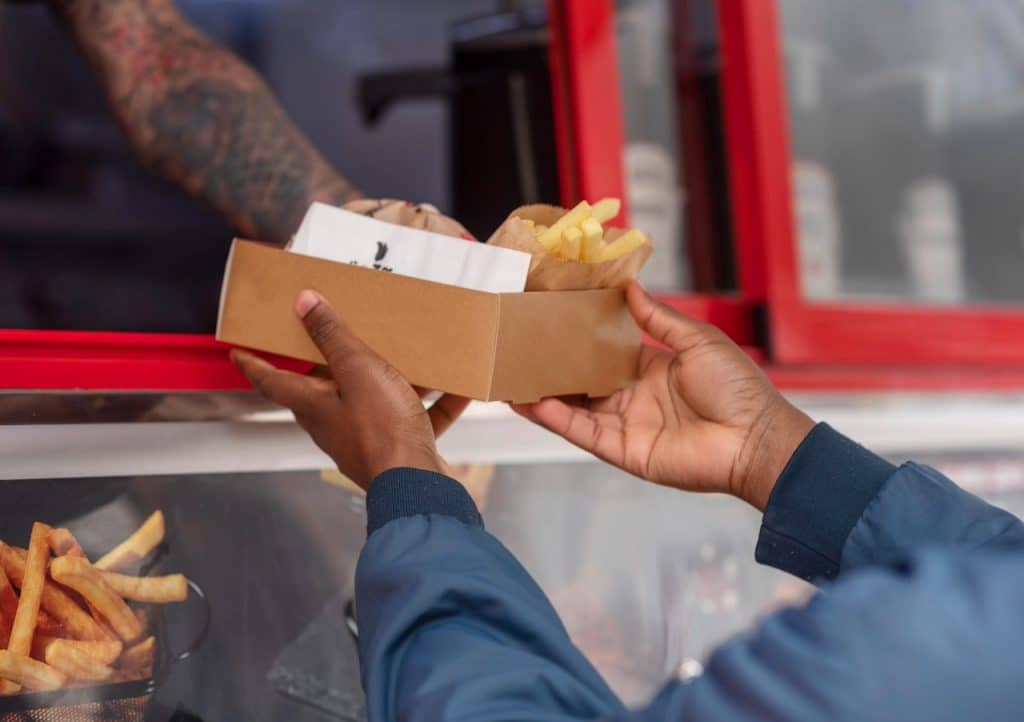
Thinking about starting a food truck in Canada? One of the first questions you need to answer is: how much does it actually cost to start a food truck business?
The answer depends heavily on your city, menu, truck or trailer, equipment, permits, staffing model, and whether you buy new or used. A food truck can require a significant upfront investment, but it can also offer a lower-cost path into the foodservice industry than opening a traditional restaurant.
Your biggest expenses will typically include the vehicle, kitchen equipment, business registration, permits and licences, insurance, initial food inventory, branding, POS technology, staffing, and working capital.
This guide breaks down the major food truck startup costs in Canada, explains what you need before opening, and shows you how to build a realistic budget.
How Much Does It Cost to Start a Food Truck in Canada?
There is no single startup cost that applies to every Canadian food truck.
A small operation using a used truck, a simple menu, and minimal staffing may require substantially less capital than a fully customized truck with commercial cooking equipment, a large menu, multiple employees, and a major-city operating permit.
For planning purposes, divide your startup budget into three categories:
- One-time startup costs: truck, equipment, branding, initial permits and professional services
- Opening inventory and launch costs: food, packaging, marketing, POS setup and initial staffing
- Working capital: cash reserved to cover operating expenses while sales ramp up
The third category is often overlooked.
Buying the truck does not mean you are ready to operate profitably. You still need enough cash to pay for food, fuel, insurance, maintenance, wages, commissary or storage costs, marketing, repairs, taxes, and other expenses after opening.
Food Truck Startup Cost Breakdown
Your budget should account for the following expenses.
1. Food Truck or Trailer
The vehicle is usually the largest single startup expense.
You can purchase:
- A new food truck
- A used food truck
- A converted commercial vehicle
- A food trailer
- A custom-built mobile kitchen
A used truck may reduce your initial investment, but you should carefully inspect its mechanical condition and kitchen systems before purchasing.
A cheap truck can become an expensive truck if you immediately need to replace the engine, generator, refrigeration, plumbing, cooking equipment, or electrical systems.
Before purchasing, verify that the vehicle can meet the requirements of the municipality and health authority where you intend to operate.
2. Commercial Kitchen Equipment
Your menu determines much of your equipment budget.
Depending on what you sell, you may need:
- Commercial refrigerator
- Freezer
- Griddle
- Grill
- Fryer
- Oven
- Range
- Food preparation tables
- Handwashing sink
- Three-compartment sink
- Water tanks
- Hot-water system
- Ventilation and hood system
- Fire suppression equipment
- Smallwares and utensils
- Food storage containers
Do not buy equipment simply because it is available.
Start with your menu and work backward.
For example, a burger truck may need a griddle, refrigeration, prep space and fryer. A coffee truck will have a very different equipment package. A pizza truck, taco truck, dessert truck, and barbecue truck will each have different infrastructure requirements.
The more complex your menu becomes, the more expensive your truck can become—and the more difficult it may be to operate during a busy service.
3. Business Registration
Before operating, you need to establish the appropriate business structure.
Depending on your circumstances, you may operate as:
- A sole proprietorship
- A partnership
- A corporation
Registration requirements vary by province and territory.
The federal government notes that businesses may also need permits and licences from federal, provincial or territorial, and municipal governments.
If you incorporate, you may incorporate federally or provincially/territorially. If you intend to operate in multiple jurisdictions, additional registrations may be required.
4. Business Number and Taxes
You may also need a Business Number (BN) and CRA program accounts.
The CRA explains that a BN is the standard identifier used to interact with federal, provincial/territorial and municipal programs. Businesses may need one when they incorporate or when they register for accounts such as GST/HST or payroll.
GST/HST registration is another important consideration.
For most businesses, the CRA’s small-supplier threshold is $30,000 in taxable supplies, measured according to the applicable rules. Once you exceed the threshold, registration and collection obligations can apply.
Talk to an accountant about your specific tax situation before opening.
5. Food Truck Permits and Licences
This is where opening a food truck becomes more complicated than simply purchasing a vehicle.
There is no single nationwide “food truck licence” that automatically lets you operate anywhere in Canada.
Requirements can exist at multiple levels of government.
You may need:
- Business registration
- Municipal business licence
- Mobile food vending permit
- Food premises approval or inspection
- Food handler certification
- Vehicle-related approvals
- Fire safety approval
- Propane or gas inspection
- Insurance
- Parking or street vending permits
- Permission to operate on private property
The exact requirements depend on where you operate.
For example, Toronto requires food trucks operating on public roads to obtain a Motorized Refreshment Vehicle owner licence and a Mobile Food Vending Permit. Toronto also requires proof of $2 million in Commercial General Liability insurance for the relevant food truck application.
Toronto Public Health also treats a mobile food premise as a food premise subject to Ontario’s food-premises requirements and inspection.
That illustrates an important point:
Do not buy your food truck before researching the regulations in your target municipality.
The truck needs to be suitable for the rules where you plan to operate.
6. Food Safety Requirements
Food safety is a major part of operating a mobile kitchen.
Depending on your location and activities, requirements may address:
- Food storage
- Refrigeration
- Handwashing
- Potable water
- Wastewater
- Food preparation
- Temperature control
- Cleaning and sanitizing
- Employee hygiene
- Pest control
- Food transportation
- Inspection
At the federal level, the Canadian Food Inspection Agency’s Safe Food for Canadians Regulations can also apply to certain food businesses depending on the activities they perform. The licensing requirement is based on the activities of the business, rather than simply whether the business is a food truck.
You therefore need to distinguish between municipal food-premises requirements and federal food licensing requirements.
Not every food truck will have the same federal obligations.
7. Insurance
Insurance is another startup expense that should be included in your opening budget.
Potential coverage can include:
- Commercial general liability
- Commercial auto insurance
- Equipment coverage
- Business interruption coverage
- Product liability
- Workers’ compensation requirements
Municipalities may establish minimum insurance requirements.
For example, Toronto’s current food truck licensing requirements include $2 million of Commercial General Liability coverage.
Your insurance broker can determine the appropriate coverage based on your vehicle, employees, locations, events, and business activities.
8. Initial Food and Packaging Inventory
You will need enough inventory to get through your opening period.
This can include:
- Meat
- Produce
- Bread and buns
- Dairy products
- Sauces
- Spices
- Cooking oil
- Beverages
- Disposable containers
- Cups
- Lids
- Napkins
- Cutlery
- Takeout bags
Avoid overbuying during your first week.
Your initial menu should be designed around ingredients that can be used across multiple dishes. This can reduce waste and make inventory management easier.
For example, if one ingredient appears in five menu items, you may be able to purchase larger quantities while reducing the number of unique products you need to stock.
9. POS System
A modern food truck needs a reliable way to accept payments and track sales. You can always get a cloud-based food truck POS software without payment integration so you can shop around for the best processing rates, without being tied up to a specific POS company, which can later increase your rates and eat up most of your profit. A good food truck POS software in Canada is Slant POS.
Your POS system should ideally handle:
- Credit and debit payments
- Mobile payments
- Menu management
- Sales reporting
- Taxes
- Discounts
- Employee management
- Inventory tracking
- Customer data
- Online ordering, if applicable
A POS system is not simply a cash register.
It can become the central source of data for understanding which menu items sell, when your busiest periods occur, and how much revenue you’re generating at each location.
For a food truck, portability and reliable connectivity are especially important.
10. Branding and Truck Wrap
Your food truck is also a moving billboard.
Budget for:
- Logo design
- Truck graphics
- Vehicle wrap or signage
- Menu boards
- Staff uniforms
- Packaging
- Website
- Social media content
- Photography
A food truck needs to be recognizable from a distance.
Your business name, menu concept, colours, and visual identity should make it obvious what you sell.
A great-looking truck can also make customers more likely to photograph and share your business online.
11. Commissary, Storage and Prep Space
Depending on your municipality and operation, you may need access to a commercial kitchen, commissary, storage facility, or approved preparation space.
This can be one of the recurring expenses that new operators fail to budget for.
You may need somewhere to:
- Store ingredients
- Receive deliveries
- Prepare food
- Clean equipment
- Fill water tanks
- Dispose of wastewater
- Store the truck
- Perform maintenance
Your local health authority can tell you what facilities and procedures are required for your operation.
12. Labour Costs
You may start by working in the truck yourself, but eventually you may need employees.
Possible roles include:
- Cook
- Prep worker
- Cashier
- Counter staff
- Driver
- Manager
When calculating labour, do not budget only for hourly wages.
Consider the full employment cost, including applicable payroll deductions, vacation pay, workers’ compensation obligations, scheduling, training, and other employment costs.
13. Marketing Costs
Your opening marketing budget does not have to be enormous.
Focus on channels that can generate local awareness.
These might include:
- Google Business Profile
- TikTok
- Local food groups
- Email marketing
- Local events
- Partnerships
- Food festivals
- Catering
- Influencer collaborations
- Local search advertising
One of the biggest advantages of a food truck is that your location can become part of your marketing.
Post your daily location and operating hours consistently.
If customers never know where to find you, they cannot become repeat customers.
How to Calculate Your Total Food Truck Startup Budget
Instead of asking only, “How much is a food truck?”, build your budget using this formula:
Total startup capital = vehicle + equipment + permits + insurance + registration + initial inventory + branding + POS + launch marketing + working capital
The working-capital component is particularly important.
Suppose your food truck is ready to open but sales are initially lower than expected. You still have bills to pay.
You should have enough cash available to survive the ramp-up period rather than spending every dollar on the truck itself.
How Much Working Capital Should a Food Truck Have?
There is no universal amount because operating costs vary considerably.
However, your financial model should account for several months of expenses rather than assuming you will immediately reach your target sales.
Create a monthly operating budget containing:
- Food costs
- Labour
- Fuel
- Insurance
- Vehicle payments
- Repairs and maintenance
- Commissary or kitchen costs
- Storage
- Parking and vending fees
- POS and software
- Phone and internet
- Marketing
- Accounting
- Loan payments
- Taxes
Then calculate how much cash you need if sales are below your forecast.
This is much more useful than simply estimating the cost of the truck.
Is a Food Truck Profitable in Canada?
Yes, a food truck can be profitable, but revenue does not equal profit.
Consider a simple example.
If your food truck generates $1,500 in sales on a busy operating day, that does not mean you made $1,500.
You still have to pay for:
- Ingredients
- Labour
- Packaging
- Payment processing
- Fuel
- Insurance
- Permits
- Vehicle costs
- Maintenance
- Marketing
- Taxes
- Other overhead
Your goal should therefore be to understand contribution margin and operating profit, not just daily sales.
How to Improve Food Truck Profitability
Several strategies can improve the economics of a food truck.
Keep the menu focused
A smaller menu can reduce food waste, simplify preparation, speed up service, and reduce inventory complexity.
Increase average order value
Use combinations, sides, drinks, desserts, and upgrades to increase the average transaction.
Track food costs
Know the ingredient cost of every menu item.
If you sell a menu item for $15, you need to know how much of that $15 is consumed by food and packaging before considering labour and overhead.
Choose locations strategically
A location with high foot traffic is not automatically profitable.
You need customers who:
- Want your food
- Can afford your prices
- Are available during your operating hours
- Can easily access the truck
Add catering
Catering can help reduce your dependence on daily street sales.
Corporate lunches, weddings, private parties, festivals, and community events can provide additional revenue streams.
Use sales data
Your POS data can tell you:
- Your best-selling items
- Slow-selling items
- Average order value
- Peak sales periods
- Sales by location
- Sales by day
- Discounts used
- Payment trends
Use that information to make decisions rather than relying entirely on intuition.
How to Finance a Food Truck in Canada
You may be able to fund your food truck using a combination of:
- Personal savings
- Bank financing
- Credit unions
- Equipment financing
- Vehicle financing
- Government-backed financing programs
- Investors
- Family and friends
- Business lines of credit
Before borrowing money, create a realistic financial forecast.
Your lender will want to understand how the business will generate enough cash to cover operating expenses and debt payments.
A strong business plan should include:
- Business concept
- Target market
- Competitive analysis
- Menu
- Pricing
- Startup budget
- Monthly operating expenses
- Sales forecast
- Cash-flow forecast
- Break-even analysis
- Financing requirements
What Is the Break-Even Point for a Food Truck?
Your break-even point tells you how much you need to sell before the business covers its costs.
A simplified formula is:
Break-even sales = fixed costs ÷ contribution margin percentage
For example, suppose your monthly fixed costs are $15,000 and your contribution margin is 60%.
Your simplified break-even sales would be:
$15,000 ÷ 0.60 = $25,000 per month
This is only an illustration. Your actual calculation should include your real food costs, labour structure, fees, financing, taxes, and other expenses.
Once you know your break-even sales, you can convert that number into a daily target.
For example, if you operate 25 days per month:
$25,000 ÷ 25 = $1,000 per operating day
That gives you a much more useful target than simply saying, “I want to make $100,000 a year.”
Food Truck Regulations Vary by Canadian City
One of the biggest mistakes new food truck operators make is assuming that Canada’s regulations are uniform.
They aren’t.
Your requirements can vary by:
- Province
- Territory
- Municipality
- Operating location
- Food type
- Vehicle type
- Preparation method
- Whether you operate on public or private property
- Whether you cater
- Whether you transport food across provincial borders
Toronto provides a good example of how detailed municipal requirements can become.
As of 2026, Toronto food truck operators can operate on certain private properties and public roads subject to licensing, permits, zoning and other restrictions. The city also has specific requirements around operating locations, insurance and vehicle documentation.
Toronto also changed its street-vending rules in 2026, including increasing permitted food-truck operating time in certain circumstances to up to 12 hours per day.
The lesson is simple:
Research your city before purchasing your truck.
Food Truck Startup Checklist
Before opening, work through this checklist:
- Choose your food concept
- Research your target market
- Analyze competitors
- Choose your business structure
- Register your business
- Determine whether you need a Business Number
- Determine your GST/HST obligations
- Research municipal licences
- Contact the local health authority
- Determine food-premises requirements, calculate your break-even sales, research the regulations in your target city, and then determine what type of food truck, use your POS and sales data to
- Research vending locations
- Determine vehicle requirements
- Obtain insurance
- Choose a truck or trailer
- Inspect the vehicle
- Purchase and install equipment
- Establish suppliers
- Design your menu
- Cost every menu item
- Set your prices
- Choose a POS system
- Develop your branding
- Create your website
- Set up social media
- Hire and train employees
- Purchase initial inventory
- Create a launch marketing plan
- Build a cash-flow forecast
- Set a daily sales target
- Keep working capital available
Final Thoughts: Is Starting a Food Truck Worth It?
Starting a food truck in Canada can be an attractive way to enter the foodservice industry without committing to a traditional restaurant location.
But the business is not simply about buying a truck and selling food.
The successful operators understand their numbers, choose their locations carefully, build a focused menu, comply with local regulations, control food and labour costs, and create a repeatable customer experience.
The smartest place to start is not with the truck.
Start with the numbers.
Determine how much capital you have, estimate your startup and monthly operating costs, calculate your break-even sales, research the regulations in your target city, and then determine what type of food truck fits your budget.
If the numbers work on paper, you can move forward with much greater confidence.
And once you’re operating, use your POS and sales data to continually improve your menu, pricing, locations, labour, and profitability.


