
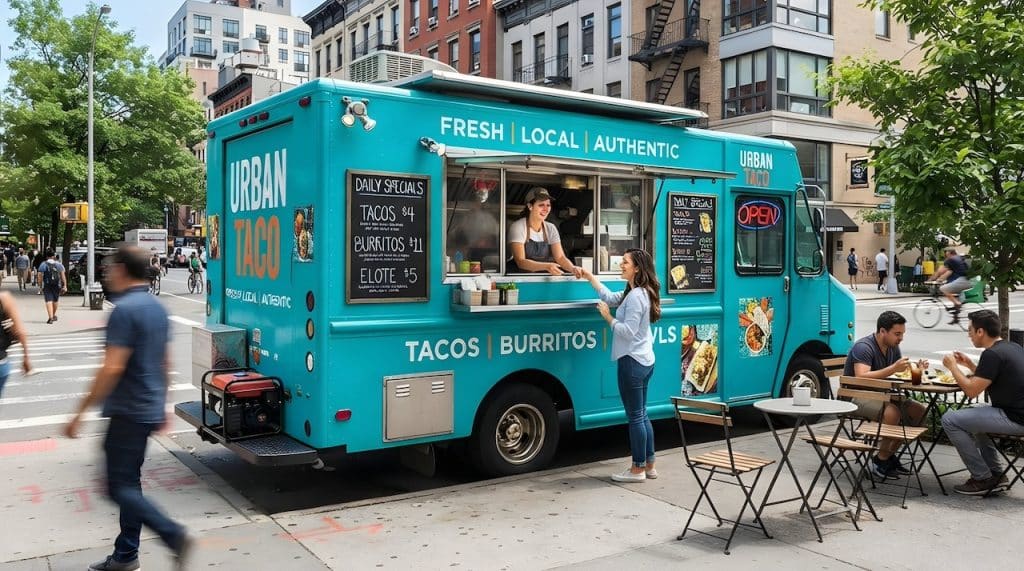
Opening a taco truck can be an attractive way to enter the food business without taking on the rent, build-out and long-term lease obligations of a traditional restaurant. It also comes with a catch: a taco truck is still a food business, and the fact that the kitchen has wheels does not make food safety, tax, licensing, vehicle, employment or vending regulations disappear.
The exact rules vary considerably by country, state, province, city and even neighborhood. In the United States, for example, the FDA Food Code is a model used by jurisdictions rather than a single nationwide food-truck license. The 2026 Food Code provides a current model for retail food and food-service regulation, while state and local authorities determine how requirements are actually adopted and enforced.
That distinction matters when planning a taco truck. Your first job is not buying a truck. Your first job is figuring out where you are legally allowed to operate, what food preparation is permitted, which licenses you need, and what type of vehicle can pass inspection.
Start With the Taco Concept
A taco truck needs a narrower concept than a full-service Mexican restaurant. Space, refrigeration, cooking capacity and labor are limited, so a menu with 30 or 40 items can quickly become an operational problem.
A practical opening menu might include three to five core proteins, one or two vegetarian fillings, several toppings, salsa, rice or beans, drinks and perhaps one specialty item. For example, a truck could focus on carne asada, pollo, carnitas, al pastor and a vegetarian taco, with a small selection of sides.
The goal is consistency. A taco that can be assembled quickly from properly prepared ingredients is more useful to a food truck than a complicated dish that requires several minutes of cooking and multiple pieces of equipment.
Before buying equipment, calculate the food cost of every menu item. Include tortillas, meat, vegetables, cheese, sauces, garnishes, packaging and condiments. Then calculate labor and other operating costs separately. Your selling price needs to leave enough gross margin to pay for wages, fuel, permits, insurance, maintenance, commissary costs, payment processing and the inevitable repairs that come with operating a vehicle.
Research the Market and Choose Your Trading Area
The best location for a taco truck is not necessarily the busiest street.
You need customers who are allowed to stop, park and purchase food where you intend to operate. Some municipalities restrict mobile vending near restaurants, schools, government buildings or residential areas. Others designate specific vending zones or require separate permits for different locations.
Research potential locations before purchasing the truck. Look at office districts, industrial areas, construction sites, breweries, nightlife districts, colleges, markets, sporting events, festivals and private commercial properties.
Private property can be particularly useful because a property owner may be willing to host the truck during specific hours, although that does not automatically eliminate municipal permitting requirements.
For example, Orlando’s current mobile-vending guidance distinguishes between different types of mobile operations and requires businesses operating within city limits to meet applicable city requirements, including a Business Tax Receipt.
This is why “Where can I park my taco truck?” should be answered before “Which truck should I buy?”
Write a Taco Truck Business Plan
A formal business plan does not have to be a 40-page document. You need a realistic operating model.
Your plan should cover:
- Concept and target customer
- Menu and pricing
- Expected daily transactions
- Average customer ticket
- Food cost percentage
- Labor cost
- Commissary or kitchen cost
- Truck payment or lease
- Fuel and maintenance
- Insurance
- Permits and licenses
- Payment-processing costs
- Marketing
- Taxes
- Emergency cash reserve
The U.S. Small Business Administration recommends separating one-time startup expenses from recurring monthly expenses and estimating the working capital required while the business gets established.
One mistake new operators make is budgeting only for the truck and equipment. A business can have a fully equipped vehicle and still fail because the owner has no money left for inventory, payroll, repairs or several slow weeks.
How Much Does It Cost to Open a Taco Truck?
There is no universal startup price because a taco truck can be anything from a modest used vehicle to a professionally built commercial kitchen on wheels.
As a broad planning range, an aspiring operator might encounter startup costs roughly like these:
| Startup expense | Typical planning range |
|---|---|
| Used food truck or trailer | $30,000–$100,000+ |
| New custom food truck | $80,000–$200,000+ |
| Kitchen equipment and upgrades | $10,000–$50,000+ |
| Permits, licenses and inspections | $500–$5,000+ |
| Insurance | $2,000–$8,000+ annually |
| Commissary/kitchen deposits and setup | $1,000–$10,000+ |
| Initial food and packaging | $2,000–$6,000 |
| POS/payment equipment | $500–$3,000+ |
| Branding, signage and website | $1,000–$8,000+ |
| Working capital | $10,000–$50,000+ |
These are planning ranges rather than government-set prices. Local permit fees, truck prices, insurance premiums, labor rates and construction requirements can move the numbers substantially.
A realistic total startup budget for a professionally operated taco truck can therefore land somewhere around $60,000 to $250,000 or more. A used truck purchased inexpensively may reduce the initial purchase price but can introduce substantial mechanical and kitchen-equipment risk.
Get an independent inspection of a used truck before buying it. Have both the vehicle and the food-service equipment examined. A bargain truck that needs a transmission, generator, refrigeration system, exhaust hood or plumbing system can become considerably more expensive than expected.
Decide Between a Truck, Trailer or Cart
A taco business does not necessarily need a traditional step van.
A trailer can provide more kitchen space for the money, but you need a suitable tow vehicle and somewhere legal to store the trailer. A truck is self-contained and easier to relocate, but the vehicle itself becomes another major maintenance expense.
A cart may have a much lower startup cost, but its menu and cooking capabilities can be considerably more restricted.
The right format depends on your menu and local regulations. Check the permitted equipment and food-preparation requirements before making the purchase.
Find a Commissary or Commercial Kitchen
Many taco trucks use a commissary or approved commercial kitchen for food preparation, storage, cleaning, water supply and waste disposal.
Do not assume that you can prepare everything in your home kitchen. Whether residential food preparation is permitted depends on the jurisdiction and the type of food involved. Meat, dairy and other potentially hazardous foods generally bring stricter requirements than low-risk foods.
The commissary may provide:
- Refrigerated storage
- Dry storage
- Food preparation space
- Potable water
- Wastewater disposal
- Ice
- Equipment cleaning
- Ingredient receiving
- Overnight truck parking
Some jurisdictions require a formal commissary agreement as part of the mobile food permit process. The exact requirement varies, so ask the health authority before signing a kitchen lease.
Understand the Permits and Regulations
This is the section that deserves the most attention because there is no single “taco truck permit” that works everywhere.
In the United States, you may need some combination of:
- Business registration
- Employer identification number
- State or local tax registration
- Sales-tax registration
- Mobile food establishment permit
- Health department approval
- Food manager certification
- Food-handler training
- Commissary agreement
- Fire inspection
- Fire suppression approval
- Propane or LPG inspection
- Vehicle registration
- Commercial vehicle insurance
- General liability insurance
- Mobile vending permit
- Parking or zoning approval
- Sign permit
- Special-event permits
- Alcohol licensing, if applicable
The SBA notes that licensing and permit requirements depend on the business activity and government jurisdiction, with local authorities determining many of the requirements that apply to a particular operation.
A taco truck using propane, a griddle, fryer or other commercial cooking equipment may also need inspection by a fire authority. The vehicle may need to meet specific requirements for ventilation, electrical systems, fuel storage, fire suppression, handwashing and wastewater.
Food Safety Is a Daily Operating System
A taco truck handles many foods that can become unsafe if temperature and sanitation controls fail.
Meat, cooked beans, dairy products, prepared vegetables, sauces and other ingredients need appropriate storage and handling. Your truck should have a system for receiving ingredients, checking temperatures, preventing cross-contamination, cleaning equipment and disposing of waste.
The FDA Food Code provides the United States with a model for retail food safety regulation, but your local authority determines which version and provisions apply to your operation.
Australia provides a useful example of how mobile food regulation works internationally. Food Standards Australia New Zealand states that mobile food businesses are subject to the same relevant food-safety requirements as other food businesses, including requirements for handwashing facilities, potable water, refrigeration, hot holding, waste disposal and suitable food-contact surfaces.
That illustrates a broader principle: putting a kitchen on wheels does not reduce the underlying food-safety responsibilities.
Global Permitting Works Differently
There is no global taco-truck license.
In the United Kingdom, a mobile food business must register as a food business with the appropriate local authority, and businesses trading from mobile units are specifically included. In England, Wales and Northern Ireland, registration generally needs to occur at least 28 days before trading. A street-trading licence may also be necessary depending on where you operate.
In Australia, mobile food businesses must notify the relevant food regulatory authority, and operators may need to notify more than one council depending on where they work.
In Canada, requirements are divided among federal, provincial, territorial and municipal authorities. Canada’s BizPaL service is designed to help businesses identify permits and licences from different levels of government.
Canada’s federal food-licensing rules can also depend on the activities the business performs rather than simply the fact that it is a food business.
The lesson is simple: determine the rules for your exact operating locations. A permit in one city may have no legal effect in another.
Design the Truck Around the Menu
Once regulations are understood, design the kitchen.
A typical taco truck may need:
- Griddle or flat-top
- Charbroiler or grill
- Commercial refrigerator
- Freezer
- Prep tables
- Three-compartment sink where required
- Dedicated handwashing sink
- Hot-water system
- Fresh-water tank
- Wastewater tank
- Ventilation hood where required
- Fire suppression system
- Shelving
- Food storage containers
- Thermometers
- Generator or approved electrical connection
- Propane system where permitted
- POS/payment terminal
Every piece of equipment consumes valuable space. The kitchen should be designed around workflow: receiving, refrigerated storage, preparation, cooking, assembly, payment and handoff.
Avoid buying equipment simply because it is standard in a restaurant. If an item does not improve your menu or throughput, it may be taking up space that could be used for something more useful.
Build a Simple Taco Truck Menu
A strong opening menu is easy for customers to understand and easy for employees to execute.
Consider having:
Core tacos: Your highest-volume proteins.
Specialty taco: A distinctive item that gives customers a reason to try the truck.
Vegetarian option: A real menu item rather than an afterthought.
Sides: Rice, beans, chips, elote or another limited selection.
Drinks: Water, soft drinks, aguas frescas or other beverages permitted in your jurisdiction.
The menu should also be engineered around ingredient overlap. If one batch of salsa can support several dishes, or the same pickled onions can be used across the menu, purchasing becomes easier and food waste can fall.
Set Up Ordering, Payments and Inventory
A taco truck can become surprisingly difficult to manage during a lunch rush if orders are written inconsistently or cash handling is loose.
A point-of-sale system can track orders, prices, taxes, payment types and sales. Inventory controls can help you understand how many tortillas, pounds of meat, drinks and other ingredients you are actually using.
Track sales by item. If carne asada represents a large share of sales but produces a weak margin, that is different from simply knowing that daily revenue increased.
You should also reconcile cash and electronic payments at the end of every shift. Small discrepancies repeated every day become real money over a year.
Hire and Train the Right Crew
A taco truck might begin with the owner and one employee. As volume grows, you may add another cook, cashier or prep worker.
Training should cover:
- Food safety
- Handwashing
- Cross-contamination prevention
- Allergen awareness
- Portion control
- Recipe standards
- Cleaning procedures
- Equipment safety
- Cash handling
- Customer service
- Opening and closing procedures
Cross-training matters because mobile businesses have little room for a single employee who knows how to perform one task and nothing else.
Get Insurance Before You Open
At minimum, investigate general liability and commercial auto coverage. Depending on your operation, you may also need workers’ compensation, equipment coverage, business interruption coverage or product liability protection.
Tell the insurer exactly what the business does. A personal vehicle policy generally should not be assumed to cover commercial food-vending activity.
Market the Truck Like a Moving Business
A restaurant has a permanent address. A taco truck does not.
Your customers need to know where you will be.
Maintain an accurate schedule on your website and social media accounts. Post the day’s location, hours, menu specials and changes caused by weather, private events or mechanical problems.
The truck itself is also a major advertising surface. A recognizable name, readable menu and clear branding can turn every trip through town into exposure.
Private events can become another important revenue stream. Weddings, corporate lunches, festivals, birthday parties and construction-site catering can provide revenue outside normal street vending.
Know Your Break-Even Point
Before opening, calculate the number of orders you need each day to cover your fixed costs.
Suppose your average transaction is $15. If the truck serves 100 customers in a day, gross sales would be $1,500. That number sounds encouraging until food, labor, payment fees, fuel, commissary expenses, insurance, maintenance, taxes and other costs are deducted.
Run three scenarios:
Slow day: Lower customer count and higher waste.
Normal day: Your expected average sales.
Busy day: Strong sales and events.
If the business only works financially under the busy-day scenario, the model needs another look.
A Practical Opening Sequence
A sensible taco-truck launch can follow this order:
- Choose the concept and target market.
- Research vending laws in every intended operating area.
- Build the menu and calculate food costs.
- Prepare the business plan and startup budget.
- Register the business.
- Identify tax and licensing requirements.
- Confirm health-department requirements.
- Find a commissary if required.
- Choose a truck or trailer that can legally accommodate the menu.
- Complete vehicle and kitchen modifications.
- Obtain inspections and permits.
- Purchase insurance.
- Set up suppliers and inventory controls.
- Install payment and ordering equipment.
- Hire and train employees.
- Conduct a soft opening.
- Measure sales, ticket times, waste and customer demand.
- Adjust the menu and schedule before expanding.
The Biggest Mistakes to Avoid
The most expensive mistake is buying the truck before understanding the regulations.
The second is building a menu that is too complicated.
The third is underestimating working capital.
Other common problems include failing to verify vending locations, ignoring vehicle maintenance, underpricing food, neglecting food-cost calculations, depending on one location, keeping poor inventory records and assuming social-media popularity will automatically translate into profitable sales.
A taco truck is a small restaurant combined with a vehicle, a logistics operation and a mobile retail business. Treating it as only a cooking project misses much of the work.
Final Thoughts
Opening a taco truck can be considerably less expensive than opening a conventional restaurant, but the business still requires serious planning. The most important early decisions are the concept, menu, operating locations, regulatory requirements, truck configuration and financial model.
Start with the local health authority, business licensing office, zoning or planning department, fire authority and vehicle regulator. Confirm the rules in writing where possible. Then buy or build the vehicle around those requirements.
The regulatory examples from the United States, United Kingdom, Australia and Canada show why a global taco-truck guide cannot provide one universal permit checklist. The fundamentals are broadly similar, but the legal details are local. In the UK, for example, mobile food businesses must register with the local authority, while street trading can require a separate licence. In Australia, mobile food operators must notify the relevant food regulator and comply with food-safety standards.
Once the legal foundation is settled, focus on the things customers actually experience: good tortillas, properly seasoned meat, fresh toppings, fast service, clean preparation and consistent portions. Keep the menu manageable, understand every dollar of cost and leave enough cash in reserve to handle the inevitable surprises.
The taco truck that survives its first year is usually not the one with the biggest kitchen or the longest menu. It is the one whose owner understands the numbers, knows the regulations, controls the operation and gives customers a reason to come back.


